Action Verbs Worksheet for Kids

Ten focused minutes can cover one action-verb practice round. An action verb names what a person, animal, or object does: run, clap, carry, whisper, or fall. This Action Verbs Worksheet for Kids: A Practical Guide for Families provides an age-flexible word set, inline worksheet, and home practice. Younger children can point, copy movements, and give one-word answers; older learners can build sentences, change verb forms, and describe sequences. Connect each verb with an action, image, and sentence.
📥 Action Verbs Worksheet for Kids
Learn, practise, and use clear action verbs through reading, matching, speaking, and writing.
Leave your email — we'll send the PDF to your inbox.No spam — the PDF plus one short reminder. Unsubscribe anytime.
What Families Need to Know About Action Verbs
Action verbs answer the question “What is someone or something doing?” In “The dog jumps,” the action verb is jumps. In “We open the window,” it is open. Begin with actions your child can see or perform. Movement gives each word physical meaning, helping children learn English alongside other languages.
Use the Action Verbs Worksheet for Kids: A Practical Guide for Families as a flexible teaching sheet, not a test. Practise six to ten verbs per round. Say each word, show the action, then use it in a short sentence with a familiar subject and setting: “I sit,” “The baby sleeps,” or “We carry the bag.”
Children need to hear how verb forms change. The base form is jump; a present-tense sentence may use jumps, while a past event may use jumped. Begin with meaning. Add grammar once your child recognises and uses the verb confidently.
A Useful Set of Verbs for Different Ages
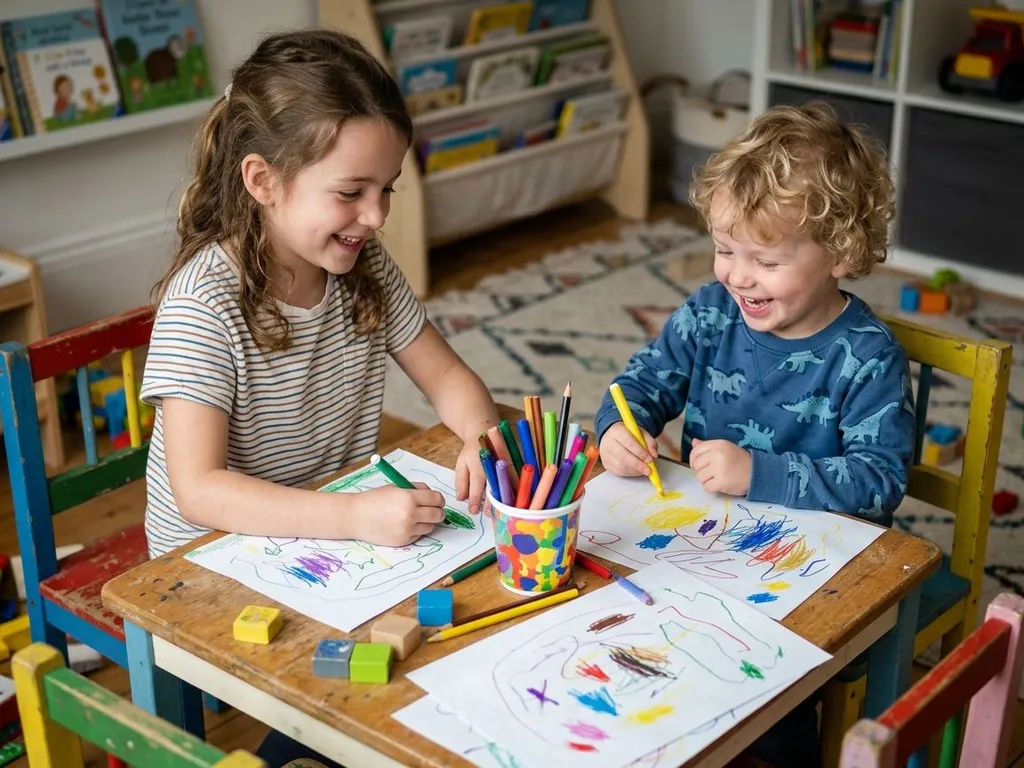
One verb set can support ages 4 to 15 when tasks match the learner. A 5-year-old might act out push. A 9-year-old might write “She pushes the door.” A 13-year-old could compare “She pushed the door” with “She has pushed the door.” Familiar words remain while grammar grows.
Treat this progression as guidance, not a timetable. Choose verbs by your child’s current English and interests, not age alone. A multilingual 7-year-old may explain complex actions; an older first-time learner may need movement and pictures. The Action Verbs Worksheet for Kids: A Practical Guide for Families can be simplified or extended without changing its core word set.
How to Use the Worksheet at Home
Start with recognition. Read a verb aloud and ask your child to point to, mime, or find the action. Next, ask for the word, then a sentence. The sequence—hear, understand, say, use—keeps practice manageable and reveals where support is needed.
Keep each round short. Choose eight verbs, demonstrate each one, then repeat the set in a new order. On another day, use the verbs in sentences. In multilingual families, a child may translate when needed, then return to the English action and sentence.
The Action Verbs Worksheet for Kids: A Practical Guide for Families works well when an adult joins the activity. Take turns giving instructions: “Clap twice,” “Open a book,” or “Carry a cushion.” Let your child lead too. Giving instructions demands more active language than following them.
Action Verbs Worksheet
Use this worksheet from a screen or copy it onto paper. Younger learners can answer orally; children who write can record full sentences. Accept a sensible answer before correcting spelling or grammar. Then model the standard form and invite another attempt.
Part 1: Choose the Action Verb
Complete each sentence with a word from this set: carries, drinks, opens, runs, sleeps, throws.
- The child ______ the gate.
- The cat ______ on the chair.
- My brother ______ a glass of water.
- The athlete ______ around the field.
- Our neighbour ______ a heavy box.
- The player ______ the ball.
Part 2: Build and Change Sentences
Choose four verbs: climb, cook, draw, listen, read, wash. Write or say one present-tense sentence for each, then change two sentences to the past. Example: “We cook soup” becomes “We cooked soup.” For an extra challenge, add where, when, or how the action happens.
Answers for Part 1 are: 1. opens; 2. sleeps; 3. drinks; 4. runs; 5. carries; 6. throws. Open sentence tasks may have more than one sound answer. The Action Verbs Worksheet for Kids: A Practical Guide for Families should reveal thinking, so ask, “Which word helped you decide?”
Practical Activities Beyond the Page
Play action charades with folded verb slips. One person acts; the others guess in a full sentence: “You are swimming.” For quieter practice, find five actions in a picture book. Ask who performs each action and what happens next, linking verbs with characters, objects, and sequence.
Try a home action hunt. Ask your child to find people cooking, reading, carrying, or cleaning in real life, book illustrations, or safe video scenes. Older children can record the base verb in one column and the form they heard in another.
LearnLink tutors adapt action-verb practice to each child’s language level, attention span, and interests. Apply the same principle at home: change one task element per round. Add new vocabulary, longer sentences, or a new tense, but avoid introducing the three changes together.
How to Notice Progress
Look for usable language, not complete accuracy. Progress means recognising a verb without a gesture, choosing it for the right situation, and placing it in a sentence. Keep a small “can use” list and revisit it after a week. If a word is forgotten, return to the action without treating the lapse as failure.
Keep correction brief and specific. If your child says, “He run,” respond, “Yes, he runs,” and request one repetition. For “Yesterday she jump,” underline the time word and model “Yesterday she jumped.” This reinforces the link between meaning, time, and verb form.
- Track five verbs your child identifies correctly during one short worksheet session.
- Compare weekly scores from the same ten-question action verbs worksheet.
- Ask your six-year-old to act out three newly learned verbs.
- Read one picture book and note independent verb discoveries together.
- Celebrate accurate answers and revisit two missed verbs through movement.
For the rule wording, Wikipedia — English Grammar is a useful reference while the practice examples here stay adapted for children.
Frequently Asked Questions
How Many Action Verbs Should My Child Learn at Once?
Six to ten verbs suit one practice set. Younger children and new learners may use four to six. Reuse the words through movement, pictures, instructions, and sentences before adding more. Using six verbs independently shows stronger learning than repeating twenty without understanding them.
Should My Child Write Every Answer?
No. Speaking, pointing, and acting are valid responses, especially for children or learners new to online English. Writing helps when it supports the language goal, not handwriting practice alone. The Action Verbs Worksheet for Kids: A Practical Guide for Families can be completed orally, in writing, or through both.
When Should We Teach Past-tense Forms?
Introduce the past tense after your child understands the base verb and uses it in a present-tense sentence. Start with a time marker such as yesterday. Regular pairs such as jump–jumped are easy to compare, while common irregular forms such as go–went and eat–ate need early, repeated practice.
What If My Child Knows the Verb in Another Language First?
That knowledge is an asset. Let your child make the connection, then attach the English word to an action and sentence. Do not ask them to suppress other languages. The goal is quick access to the English verb when speaking or reading, not removing known words.
- Start with six to ten visible actions.
- Practise each verb through movement before adding a sentence.
- Review the same set after a week and record which verbs your child can use independently.
Want to see how these ideas work in a real lesson — try a free LearnLink lesson.
Stay updated on our latest tips and resources by following us on Instagram LearnLink.