Are Flashcards Effective for Kids?
The answer to “Are Flashcards Effective for Kids Learning English? Vocabulary and Activities” is yes when each card requires three actions: recall the word, say it aloud, and use it in a sentence before checking the answer. A five-to-ten-minute session links pictures, meaning, and sound for beginners; older learners practise spelling, phrases, and word partners. Cards prompt recall, while spaced review and exchanges such as “What colour is the bag?” “It is blue.” turn recognition into speech. The goal is to make each word available in conversation, not race through a large pack.
📥 Make Flashcards Work for Real English
A printable practice pack for choosing useful cards, building sentences, and creating an effective routine
Leave your email — we'll send the PDF to your inbox.No spam — the PDF plus one short reminder. Unsubscribe anytime.
What Flashcards Can and Cannot Teach
The search phrase “Are Flashcards Effective for Kids Learning English? Vocabulary and Activities” suggests the right test: does your child produce language or merely see it? A strong card shows a picture, object, or question first. Your child pauses, recalls the word, and says it before checking the answer. That effort strengthens retrieval.
Review works best when spread across sessions. A major review of learning techniques found strong support for practice testing and distributed practice. With flashcards, revisit words after a gap instead of repeating the same pack many times in one sitting.
Cards cannot teach full conversations, natural listening, or whether a phrase sounds rude, warm, or formal. They prepare words for use. Children still need stories, songs, play, reading, and exchanges with a parent, classmate, or tutor.
Build a Useful Starter Deck
For families searching “Are Flashcards Effective for Kids Learning English? Vocabulary and Activities,” card design is the starting point. Put one clear cue on the front. On the answer side, add the target word, a short phrase, and one sentence your child could use that day. Avoid crowded cards with multiple pictures or long definitions.
The cards below form a starter deck for school-age children. Draw the pictures together or use family photos. A home-language translation can sit beside the answer when needed, but it should support the English phrase, not replace it. Match family pictures to people your child knows.
🔴 Front: A red circle
Answer: red
The circle is red.
🎒 Front: A blue school bag
Answer: bag
My bag is blue.
🍎 Front: Three apples
Answer: apples
I can see three apples.
🐈 Front: A cat on a chair
Answer: cat
The cat is on the chair.
💧 Front: A glass of water
Answer: water
Can I have some water?
🏃 Front: A child running
Answer: run
I can run fast.
📖 Front: An open book
Answer: open
Please open your book.
😊 Front: A smiling face
Answer: happy
I feel happy today.
👪 Front: A parent and child
Answer: parent
This is my parent.
🧸 Front: A toy under a table
Answer: under
The toy is under the table.
Move from Cards to Real Sentences
A complete answer to “Are Flashcards Effective for Kids Learning English? Vocabulary and Activities” includes what happens after turning the card. Follow this sequence: look, recall, check, say, and change. For a blue bag, your child might say “bag,” check the answer, read “My bag is blue,” then change it to “My bag is green.”
Ask questions requiring more than yes or no. With the cat card, try “Where is the cat?” followed by “What is the cat doing?” A young child may answer, “On the chair.” Model the full sentence once: “The cat is sitting on the chair.” Invite another attempt without turning it into a grammar test.
Older learners need richer prompts. A card for borrow can include borrow a book and “Can I borrow your pen?” A card for decide can include decide to go. Word partners help children build natural sentences instead of translating words individually.
Activities That Fit Each Age
Do not use the same deck identically from age 4 to 15. Younger children learn through movement, pictures, and quick turns. Older children can sort meanings, explain choices, and speak at greater length. Choose activities that require recall without making each mistake feel like a test.
For a first online lesson, model one round before the child leads. Once the rules are clear, swap roles. Let your child quiz you, spot a deliberate mistake, or choose the next category. Role changes give English a social purpose.
A Practice Routine and Mistakes to Avoid
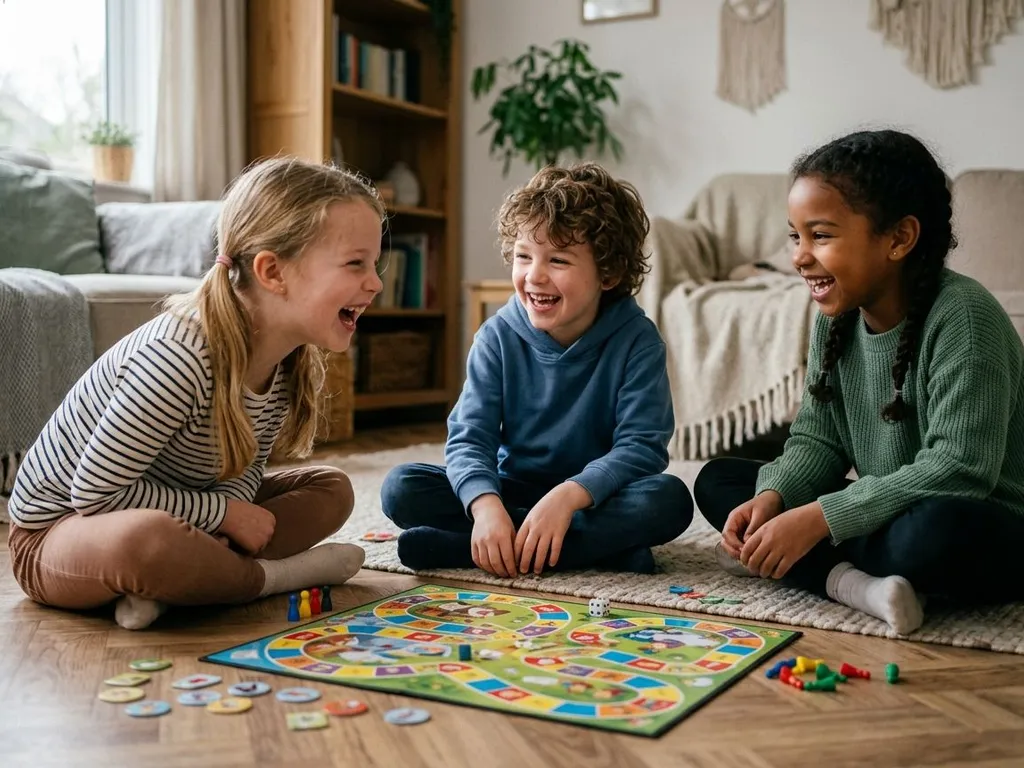
A practical home answer to “Are Flashcards Effective for Kids Learning English? Vocabulary and Activities” is a short routine across the week. Start with a small mixed pack. Review known cards, add two or three newer ones, and finish with a sentence game. Revisit difficult cards the next day and easier cards after a longer gap. Shuffle them so position cannot become the clue.
Try It: Look, Say, Change
Show a card and wait. Your child says the word, checks the printed answer, and reads the example. Ask for one change: a new colour, number, person, place, or action. “The dog is under the table” might become “Two dogs are beside the door.”
Mistakes include revealing the answer too soon, adding too many new cards, keeping a fixed order, and treating silent recognition as mastery. Translation-only cards are weak for concrete words: a picture of rice or a door links directly to meaning. Reserve translations for ideas that are difficult to show.
Correct with a model, not a lecture. If your child says “She have a book,” respond, “Yes, she has a book,” then ask for the sentence again. For pronunciation, use clear tutor input or audio from a trusted learner’s dictionary when unsure. Record cards needing support, but never reward speed over clear, thoughtful speech.
- Start with five picture flashcards for ages four to six, practicing daily.
- Use spaced repetition, reviewing cards after one, three, and seven days.
- Read one picture book, then match six flashcards to story words.
- Ask your child to draw and label three newly learned words.
- Avoid testing long lists; stop after ten minutes while interest remains.
Frequently Asked Questions
How Often Should My Child Practise with Flashcards?
Short sessions across the week beat one long drill. For most children, five to ten minutes is enough for one round, but attention matters more than time. Stop while your child still responds carefully. Mix recent and older cards, moving easy ones into less frequent review instead of removing them.
Should Cards Use Pictures, English Words, or Translations?
Use pictures for visible nouns, actions, colours, and positions. Add the written English word as your child begins reading. A brief home-language translation helps with abstract meanings, especially in multilingual families, but place it beneath the English cue on the answer side. The front should prompt English recall, not immediate translation.
Are Digital Flashcards Better than Paper Cards?
Neither format always wins. Paper cards support drawing, sorting, hiding, and movement without a screen. Digital cards can play audio, schedule review, and suit travel or online lessons. Choose the format your child uses actively. Tapping “show answer” silently teaches less than recalling the word aloud in either format.
Are Flashcards Enough for a Child to Learn English?
No. The full answer to “Are Flashcards Effective for Kids Learning English? Vocabulary and Activities” is that cards support language retrieval but cannot replace conversation, listening, reading, or play. Use each reviewed word in a question, story, instruction, or exchange. In LearnLink lessons, tutors connect vocabulary practice with speech so children learn when and how to use each phrase.
- Start with a small mixed deck and ask your child to recall each word before revealing the answer.
- Practise for five to ten minutes across several days, spacing difficult and familiar cards differently.
- Use every reviewed word in a sentence, question, story, or short conversation.
Want to see how these ideas work in a real lesson — try a free LearnLink lesson.
Stay updated on our latest tips and resources by following us on Instagram LearnLink.