Everyday Phrasal Verbs in English for Kids
Start with three action-based phrasal verbs from one daily routine. Learning everyday phrasal verbs in English for kids helps children follow home routines, classroom directions, stories, videos, and conversations. Demonstrate each familiar action and repeat it during daily practice. This guide gives meanings, age-based examples, and activities for children learning English as an additional language.
📥 Everyday Phrasal Verbs in English for Kids
A practical home practice pack with meanings, examples, activities, and a weekly recall tracker
Leave your email — we'll send the PDF to your inbox.No spam — the PDF plus one short reminder. Unsubscribe anytime.
What Families Need to Know
A phrasal verb combines a verb and particle, such as up, out, or after. The meaning may be literal: stand up means rise to your feet. It may change completely: find out means learn information.
Teach everyday phrasal verbs in English for kids as complete chunks. Presenting look after as one unit works better than analysing look and after separately. Demonstrate the meaning with a gesture, object, picture, or scene.
Teach meaning before grammar. A child first needs to understand and use “Put on your shoes.” Later, explain that we say “Put your shoes on” and “Put them on,” but not “Put on them.”
A Practical Starter Set
The best everyday phrasal verbs in English for kids describe home, play, and lesson actions. Begin with phrases your child can perform. Introduce abstract meanings, including find out, after action phrases become familiar.
Keep phrases without objects together: “Please calm down.” With turn off and pick up, a noun may follow the phrase or split it: “Turn off the light” and “Turn the light off.” Pronouns go between the parts: “Turn it off.” Fixed combinations such as look after stay together: “Look after him.”
How to Introduce the Phrases at Home
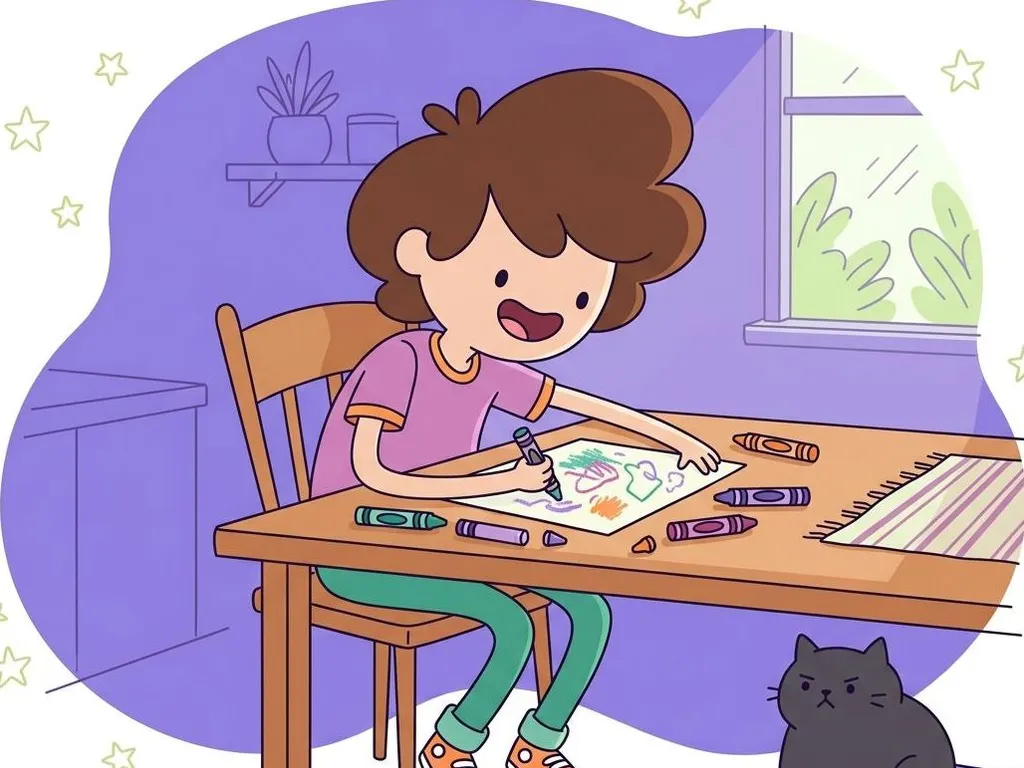
Choose phrases from one routine. In the morning, use wake up, get up, and put on. While tidying, use pick up, put away, and turn off. Routines give everyday phrasal verbs in English for kids a practical purpose instead of making them test items.
Model each phrase while acting: “I’m putting on my coat.” Give one direction: “Put on your hat.” Then ask, “What do you put on when it rains?” Accept a short answer before requesting a full sentence.
Reuse each phrase with different objects. Pick up can describe a toy, spoon, or backpack. In LearnLink lessons, our tutors place new language in short exchanges, actions, and familiar situations, connecting words with meaning.
Examples and Expectations by Age
For school-age kids, focus on movement and routine. Say the phrase, perform the action, and let the child copy: “Stand up,” “Sit down,” or “Put away the bear.” Practise two or three phrases in a short play session. Skip explanations of particles and sentence patterns.
For school-age kids, group phrases by situation and create short exchanges. One person asks, “What are you looking for?” The other answers, “I’m looking for my book.” Children can begin comparing noun and pronoun forms: “Pick up the card” and “Pick it up.”
For school-age kids, introduce less literal meanings and tone differences. Learners can compare find out with learn, or work out with solve. They can use everyday phrasal verbs in English for kids and teens to retell a day, write dialogue, or make spoken instructions sound natural.
Practical Activities That Build Recall
Play “Do the opposite” with stand up/sit down, put on/take off, and turn on/turn off. Give a direction, then have your child name and perform the opposite. Switch roles so the child gives directions.
For a sorting game, write phrasal verbs on cards and sort them under morning, clothes, tidying, play, and learning. Cards may fit multiple groups. Ask your child to explain each choice in a sentence; no single answer is required.
Try an Action Detective Game
One person silently acts out wake up, put on, or look for. Other players guess with a full sentence: “You are looking for your keys.” Award one point for the correct phrase and another for a complete sentence. Older children can act out less literal phrases such as find out or work out.
- Practice five everyday phrasal verbs in English for kids during breakfast.
- Use picture cards to match four verbs with actions before bedtime.
- Read one picture book aloud and act out three target verbs.
- Review yesterday’s verbs through a two-minute treasure hunt after school.
- Celebrate correct recall with stickers, then revisit missed verbs tomorrow morning.
For the rule wording, Wikipedia — English Grammar is a useful reference while the practice examples here stay adapted for children.
Frequently Asked Questions
How Many Phrasal Verbs Should a Child Learn at Once?
Start a beginner with two or three phrases from one routine. An experienced learner may manage five or six. The next day, check which phrases the child understands and uses. Add one new item while reviewing the earlier set.
Should We Translate Phrasal Verbs into Our Home Language?
A brief translation can confirm a non-literal meaning. Then return to an English example, action, or picture. Multilingual children can compare how their languages express the idea. Translation stops helping when children memorise a one-word match but cannot use the English phrase in a sentence.
Why Does My Child Understand a Phrase but Not Use It?
Understanding usually precedes confident speech. Everyday phrasal verbs in English for kids require repetition in meaningful situations. Offer a sentence to complete, such as “Please turn ___ the light,” or give two choices. Avoid correcting every pause. Model the answer and let the child try again.
Are Phrasal Verbs Suitable for School Writing?
Phrasal verbs can suit school writing, depending on the task. Find out works in a personal account or informal explanation; learn or determine may suit a formal report. Older learners should practise choosing between them instead of treating every phrasal verb as informal. Prioritise accurate meaning and use.
- Start with two or three phrases from one daily routine.
- Practice each phrase through actions, directions, and short answers.
- Try the same phrase with new objects and settings the next day.
Start your child's English journey today — book a trial lesson with LearnLink.
Stay updated on our latest tips and resources by following us on Instagram LearnLink.