Why Speaking Confidently Matters for Kids
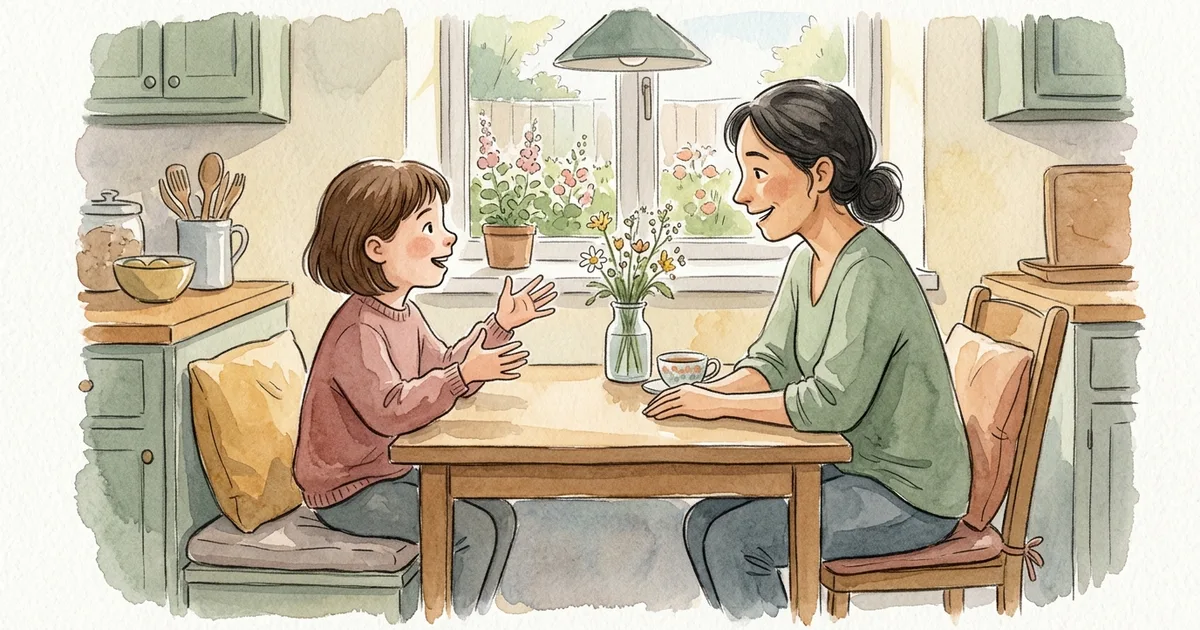
Why speaking confidently matters for kids is simple: confidence lets children use the English they know to ask, explain, join in, and repair misunderstandings. It does not mean speaking loudly, answering first, or avoiding mistakes. A confident speaker can pause, find a word, and try again. This skill supports learning, friendships, travel, and independence. For multilingual children, English becomes another practical language, not a test of intelligence or personality.
📥 Brave Voice Practice Pack
Calm, clear speaking activities for home
Leave your email — we'll send the PDF to your inbox.No spam — the PDF plus one short reminder. Unsubscribe anytime.
What Families Need to Know
Speaking confidence is willingness to communicate through uncertainty. A child may know words and grammar yet avoid speaking because they fear correction, need thinking time, or rarely lead conversations.
Why speaking confidently matters for kids becomes evident when knowledge meets use. Workbook vocabulary cannot help a child ask for a turn, describe a problem, or state a need. Children need safe, repeated chances to turn knowledge into speech.
How Confidence Changes Communication
Confident speakers take small risks: trying a new phrase, asking what a word means, or saying, “Let me explain another way.” Repair skills matter because real conversations are rarely perfect, even between fluent speakers.
Confidence sustains practice. A child who speaks often receives natural feedback: a listener understands, asks a follow-up question, or models a better phrase. The child can apply that feedback in the next conversation.
Why speaking confidently matters for kids is not about a flawless accent. Shared meaning, careful listening, and responsive speech are stronger goals. A child can retain a home accent and become an effective English speaker.
Support Without Pressure
Children speak more freely when adults respond to meaning before correcting form. If a child says, “Yesterday we go park,” answer the message: “You went to the park? What did you do there?” This models the past tense without stopping the conversation.
Use correction selectively. Choose one relevant point after the child finishes, practise it briefly, and move on. Correcting every error turns an ordinary exchange into an oral test.
How to Practise at Home
Why speaking confidently matters for kids is easiest to show through purposeful talk. Ask your child to choose a film, explain a game, order a pretend meal, or give directions to a familiar place. Purpose creates a goal beyond “practising English.”
Keep sessions short enough to end well. Five focused minutes can beat a long exchange filled with prompts and corrections. Younger children can use toys, pictures, and movement. Older children may prefer opinions, plans, role-play, music, sport, science, or games.
Try the Pause-and-build Routine
Ask one open question, then allow a few quiet seconds. Accept the first answer without correction. Add one follow-up: “Why?”, “What happened next?”, or “Which one would you choose?” Finish by repeating one strong phrase your child used.
Examples by Age
For school-age kids, speaking grows through play and repetition. A child can instruct a toy, finish a familiar line, identify what is missing from a picture, or choose between two snacks. Accept gestures and single words, then expand them: “Red one” can become “You want the red one.”
For school-age kids, assign a defined role. The child might explain game rules, compare two animals, plan a picnic, or retell a cartoon scene. Sentence starters such as “I think…,” “First we need…,” and “I disagree because…” make starting easier.
For school-age kids, protect dignity and choice. Invite discussion instead of demanding a performance. A young person might review an app, defend a school proposal, record a private voice note, or prepare tutor questions. Some speak more readily while walking or doing another activity than under direct eye contact.
Activities That Make Speaking Useful
Strong speaking activities need a listener, purpose, and choice. “Name ten animals” checks recall. “Choose an animal for our imaginary wildlife park and persuade us” requires vocabulary, reasons, questions, and responses.
Home activities include:
- Information gap: each person has part of a picture or schedule and must ask questions to complete it.
- Mystery object: one person describes an object without naming it while others guess.
- Choice challenge: the child chooses between two options and gives a reason.
- Story switch: family members take turns adding one event to a story.
- Teach me: the child explains a skill, recipe, game, or school idea to an adult.
Why speaking confidently matters for kids is visible in these tasks: the child uses English to make something happen instead of reciting for approval. In LearnLink lessons, tutors adjust prompts, wait time, and language support during one-to-one work for children ages 4–15.
How to Notice Progress

Look beyond grammar scores. Progress appears when a child starts conversations, adds detail, asks for clarification, continues after an error, or uses a familiar phrase in a new setting. Such changes often emerge gradually.
Keep a simple family record. Each week, note one independent attempt and one phrase that became easier. Avoid comparing siblings or classmates. A child managing several languages may understand a concept before finding its English words.
If a child is quiet in every language, struggles to understand everyday speech, shows distress about speaking, or loses previous skills, discuss the pattern with the school and a qualified health or speech-language professional. English practice must not obscure a wider communication concern.
- Record your six-year-old answering one familiar question weekly, then compare monthly clips.
- Count three spontaneous sentences during dinner and note them on a simple calendar.
- Read one picture-book page aloud together, praising clear attempts rather than perfect pronunciation.
- Ask your child to rate speaking confidence from one to five each Friday.
- Celebrate one specific improvement, explaining why speaking confidently matters for kids.
When a word has several meanings or pronunciations, Cambridge Dictionary is a useful check before turning it into child-friendly examples.
Frequently Asked Questions
Should We Correct Every English Mistake?
No. Respond to meaning first, especially during free conversation. Correct an error when it blocks understanding, matches the current learning goal, or can be fixed without breaking the child’s flow. Natural reformulation often works: if the child says, “She have a dog,” reply, “Yes, she has a dog.”
What If My Child Understands English but Will Not Speak It?
Reduce the speaking step. Offer choices, sentence starters, role-play, or private rehearsal. Do not label the child as shy or reject every nonverbal response. A gesture can become one word, then a phrase, then a fuller answer as safety and familiarity grow.
Does Using Our Home Language Slow English Speaking?
No family needs to abandon a strong home language to support English. Children can discuss an idea in their strongest language, learn the needed English phrases, then try again. Rich family conversation supports thinking, identity, and connection; English practice need not replace it.
How Often Should Children Practise Speaking?
Brief, frequent practice is easier to maintain than occasional long sessions. Use daily routines: describe breakfast, predict a story event, explain a homework choice, or share one positive moment before bed. Stop before the exchange becomes tiring or repetitive correction begins.
Why Is Speaking Confidence Important If Grammar Is Not Perfect?
Why speaking confidently matters for kids is that communication cannot wait for perfect grammar. Children need to ask questions, share ideas, and respond with their current language. Accuracy develops alongside use. Confidence creates enough emotional room to notice feedback, try a better form, and continue speaking.
Want to see how these ideas work in a real lesson — try a free LearnLink lesson.
Stay updated on our latest tips and resources by following us on Instagram LearnLink.